October 09, 2026



By the second week of January, the decorations are usually crammed into whichever box is nearest, the cards are in a heap on the sideboard and nobody is quite sure where last year's photographs ended up. It isn't laziness. Christmas simply has no obvious place to land. A keepsake box gives it one: a single labelled home for the cards, baubles and photographs you genuinely want to see again, and a clear line between what stays and what goes.
One box, not four. That constraint does most of the work for you, because it forces an edit every year instead of letting the pile grow quietly for a decade.
Look for a lidded box with a decent seal: a plastic storage crate with a gasket, or a sturdy archive-style cardboard box if it will live somewhere dry. Choose something that stacks, and label it on the short end so the year and contents are readable when it sits on a shelf.
Clear the kitchen table, put a recycling bag on the floor and make three piles: keep, pass on, gone. Work quickly and don't reread everything. A card earns its place in the keep pile if it has handwriting in it, a photograph you'd want anyway, or a story attached. The rest goes.
Pass on what someone else would use: unopened cards and gift bags to a charity shop, decorations in good condition to a younger relative setting up home, school fair collections in the autumn. The gone pile is for anything damp, mouldy, broken or glittery beyond saving.
Handwriting is the reason to keep a card. A note from a grandparent, a friend's wobbly message from a hard year, a child's first attempt at writing their own name inside a card. Those are the ones worth the space.
Never use sellotape on a card you care about, and avoid marker pens on photographs and cards alike. Ink can bleed and pressure marks stay.
A bauble without a note becomes anonymous within a decade. Tie a small luggage tag to the loop with string and write two things: the year and where it came from. "Nan's tree, 1990s." "First Christmas in the flat, 2014." "Bought in Bruges, 2019." That's the difference between a box of decorations and a box of memories.
Wrap glass and heirloom pieces in tissue or kitchen roll. Newspaper is tempting and a mistake: the ink transfers and the paper holds moisture. Keep the fragile pieces in a compartment tray and the robust plastic ones together in a cloth bag.
Before the box is sealed, take a photograph of it packed. Next December you'll know exactly how it went in, and everything will fit again.
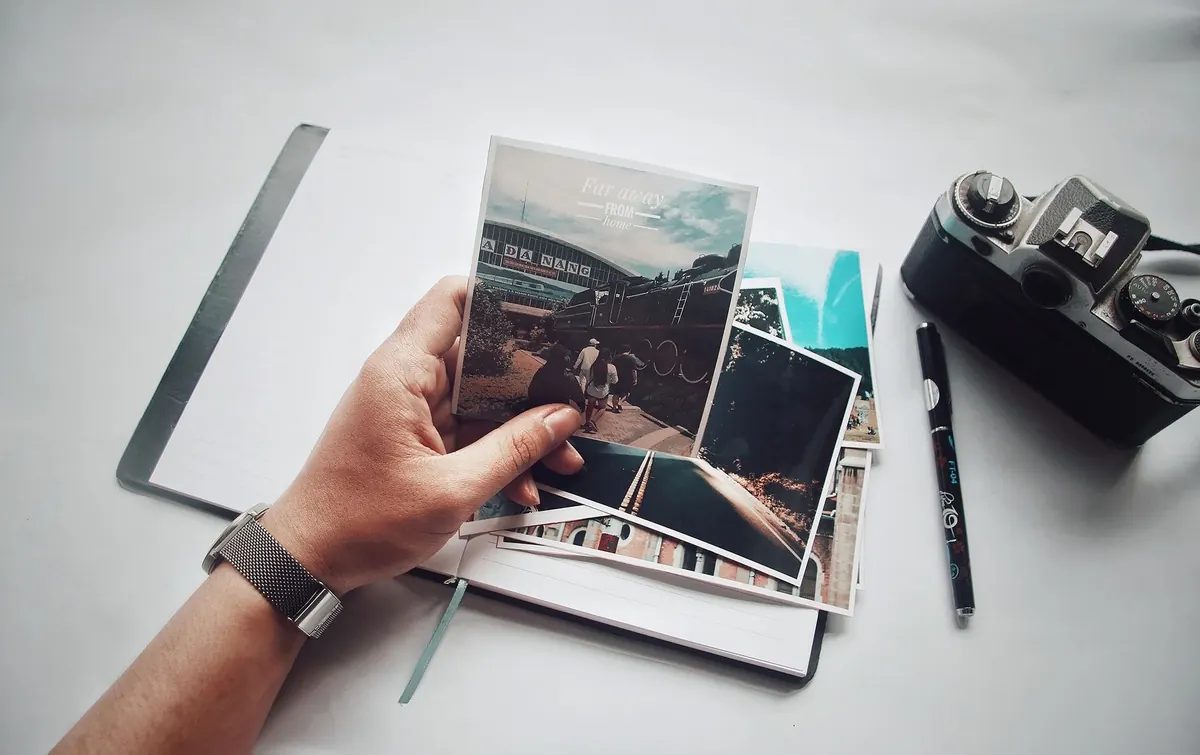
Digital photographs are the easiest thing to lose, because they never demand a decision. December alone can produce two hundred images, and none of them will be looked at again in the same way a print is.
If you inherit a shoebox of old family photographs, label what you can while the people who remember are still around to ask.
Cool, dry and stable beats convenient. A bedroom cupboard or under a bed is usually fine. Lofts swing between extremes of heat and cold, garages and sheds are damper than they feel, and a spot beside a radiator will dry out paper and soften old glue. If the loft is the only option, use a sealed plastic crate with silica gel sachets and check it each year for condensation. Paper and photographs are also worth keeping away from direct sunlight, which fades them quietly.
Put a date in the calendar for the last weekend of January, or Twelfth Night if you prefer to finish the season properly. Bring the box out, add the year's cards and the photo envelope, write the new year on the label, and close it. Ten minutes, once a year.
Then apply the one rule that keeps a keepsake box from becoming a storage problem: if it won't close, something comes out. Take five minutes to choose the least meaningful item and let it go. The box stays a pleasure to open, and next Christmas you'll know exactly where everything is.
Photo: karishea / Pixabay
Preserve and share your life's memories.
Copyright © 2026 Memo Lane. All rights reserved. Memo Lane.