October 09, 2026



Every British coastal holiday leaves behind a small, gritty trail: a pocket of shells, a damp ticket from the pier, a receipt for two 99s, and a phone full of photos with a horizon that tilts slightly to the left. Most of it ends up in a drawer or gets deleted in a clear-out. A seaside memory journal gives all of it somewhere to live — and it takes an afternoon or two, not a whole summer.
The trick is to treat the journal as a record of the place, not just the people. Anyone can stick in a photo of the family on the sand. Fewer people note that it rained until two o'clock, that the tide was so far out you could walk to the second groin, or that the chip shop had run out of vinegar. Those are the details that bring a coastal trip back years later.
You do not need much, but you do need the right things. Sand and salt are the enemies of paper, so a little preparation saves a journal that will fall apart by autumn.
Keep the kit in a cotton tote rather than a plastic bag. Anything that traps damp will encourage mould, and a British beach can be very damp indeed.
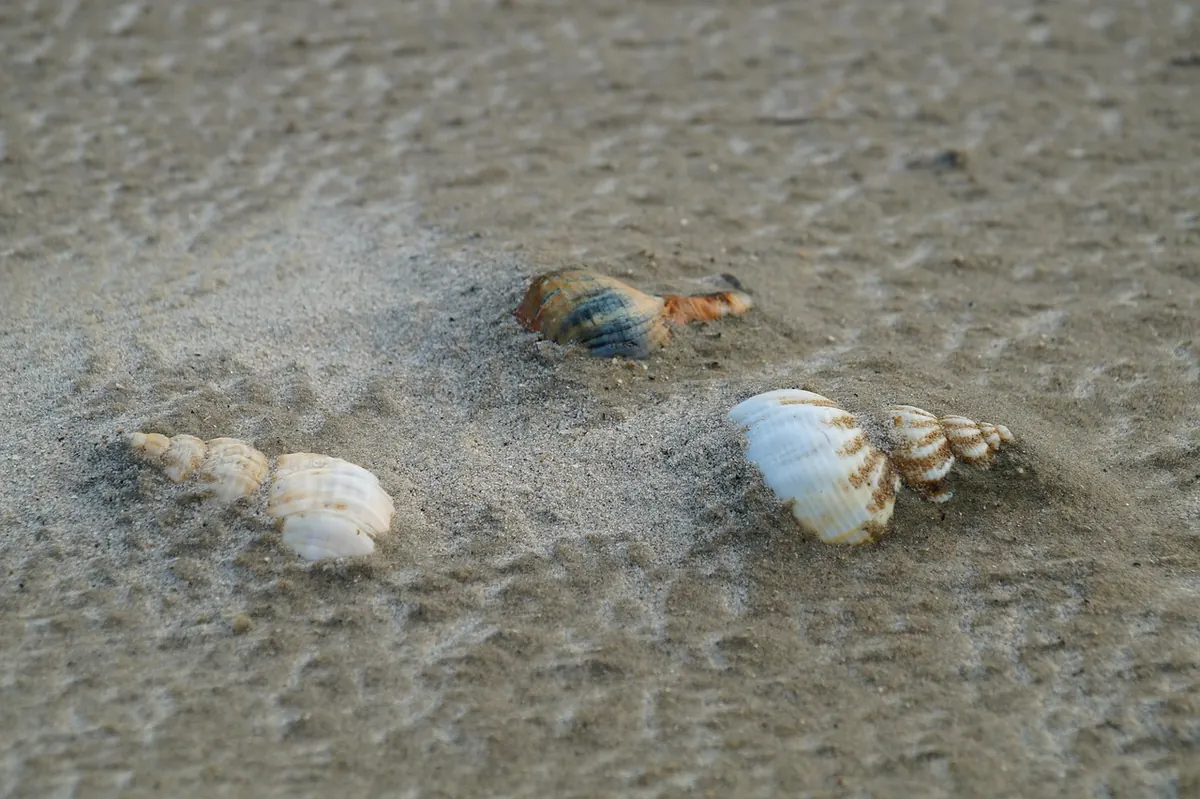
It is easy to come home with a bucket of stones and no idea what to do with them. Set yourself a small rule before you go: one find per day, or one per place. That keeps the journal looking deliberate and stops you carrying half of Norfolk back to a flat in Leeds.
Good things to keep:
Leave living things where they are. Shells with a creature still inside, starfish, and anything attached to a rock should go back. Check local rules on collecting — some sites and nature reserves restrict it — and never take from protected areas.
Sand is abrasive and slightly salty, and it will scratch both photos and the opposite page. Rinse shells in fresh water, dry them fully on kitchen paper — a day or two in a warm room, not on a radiator — and give them a brush before they are glued down. If a shell still smells of the sea after a week, it was not clean or dry enough; leave it out longer.
If you are gluing anything bulky, use a strong PVA or a hot glue gun and accept that the page will have a bump. Alternatively, stitch or staple a small paper envelope to the page and keep the find inside. That way the journal stays flat and the shell stays safe.
Photos remember faces. Notes remember weather, smells and small humiliations. On the day itself, jot five things on the page or in a notes app:
That last one is often the best entry in the whole journal. A child announcing that the sea is "too big" or a stranger's comment about the queue for the loo will do more for your memory than any caption.
Write the entry as if the reader has never been to that beach and never will. What would they need to picture it?
A common mistake is to fill every centimetre. Leave white space, especially around photos, and let some pages carry only a ticket and two lines of writing. It looks calmer and it gives you room to add things later — a postcard bought on a return visit, a note from someone who was there.
A simple page structure that works well:
If you are making the journal for children, let them do the gluing and write their own captions, spelling mistakes and all. In twenty years those mistakes will be the point.
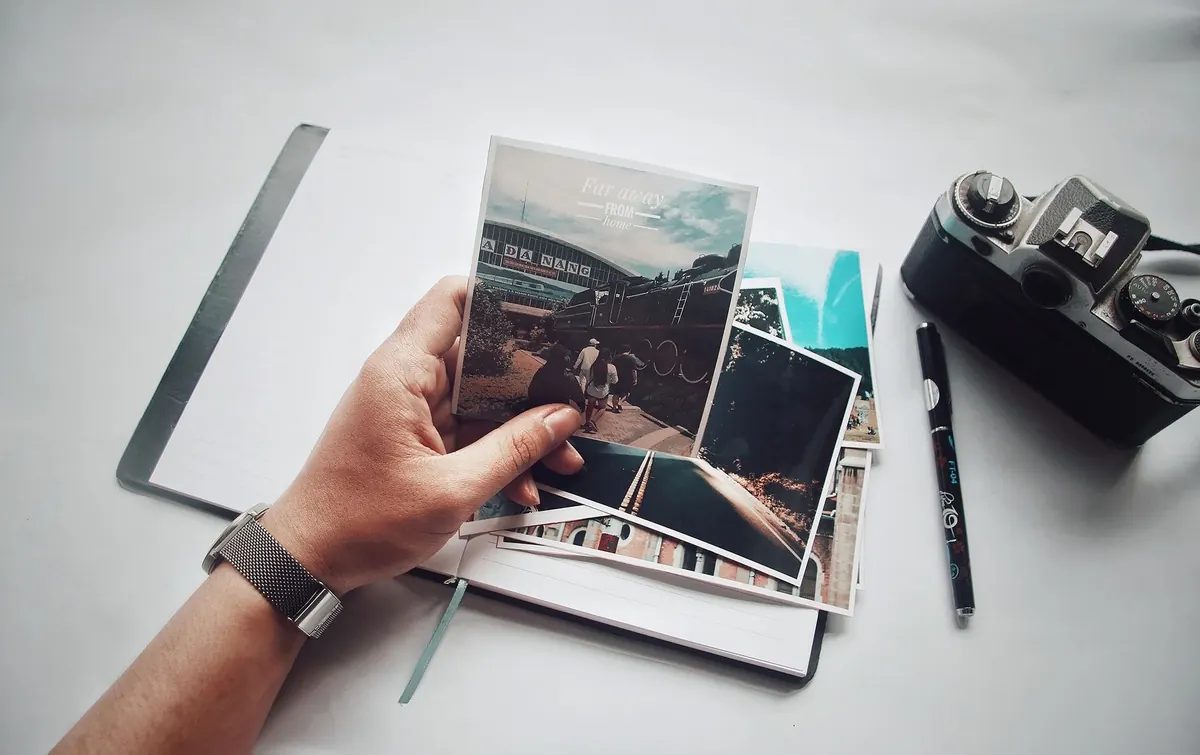
Some photos will only ever exist on a phone, and some tickets will be emailed. Print the best few at a size that fits your pages — a home printer on matte photo paper is perfectly good. Screenshot digital tickets and confirmation emails, then print them small. Write the file reference or date on the back of each print in pencil so you can match it to your notes later.
Back up the digital originals somewhere sensible as well. A journal with glued-in prints is not a backup, and phones get lost in rock pools.
Coastal journals need kinder storage than most. Damp is the real risk, so keep the finished book somewhere dry and airy rather than in a garage, loft or shed. A shelf inside the house is fine. If you are worried about humidity, a lidded archive box with a couple of silica gel sachets will help, but replace the sachets now and then as they stop working.
Handle pressed finds and sea glass occasionally rather than never — a book nobody opens is just a box with a spine. If something is fragile, slip it into a paper pocket so it can be looked at without being touched.
The journals that survive are the ones that get ten minutes on the day and half an hour at home, not the ones planned for a wet winter week that never arrives. Keep the kit by the door, add to the book the evening you get back from the beach, and let it be imperfect. A smudge of sun cream on a page, a shell that will not lie flat, a caption written in pencil because the pen ran out — those are part of the record too.
Do that for a few summers and you will have something better than a photo album. You will have a stretch of coast, in your own handwriting, with the weather included.
Photo: thgmueller / Pixabay
Preserve and share your life's memories.
Copyright © 2026 Memo Lane. All rights reserved. Memo Lane.