October 09, 2026



Memory keeping has a reputation for being a hobby with a lot of kit attached: archive boxes, washi tape, three half-finished albums on a shelf. It doesn't have to be that way. If you record ordinary things — a Tuesday coffee, a phrase your child has started using, the walk you do most weeks — you'll have something worth reading in a month's time. What follows is a four-week plan built around five steps. Do them in order, and don't wait for a tidy desk or better handwriting.
The most common reason people abandon memory keeping is that they chose a format too big to finish. Decide now, before you buy anything, what your record will live in. Any of these will work:
Pick the smallest option you can live with for a month. A useful test: if a week's entry would take more than twenty minutes to put together, the format is too ambitious. Start smaller than feels satisfying and add to it later.
Buy nothing else until the month is over. Most memory-keeping clutter is bought in the first fortnight and used twice.
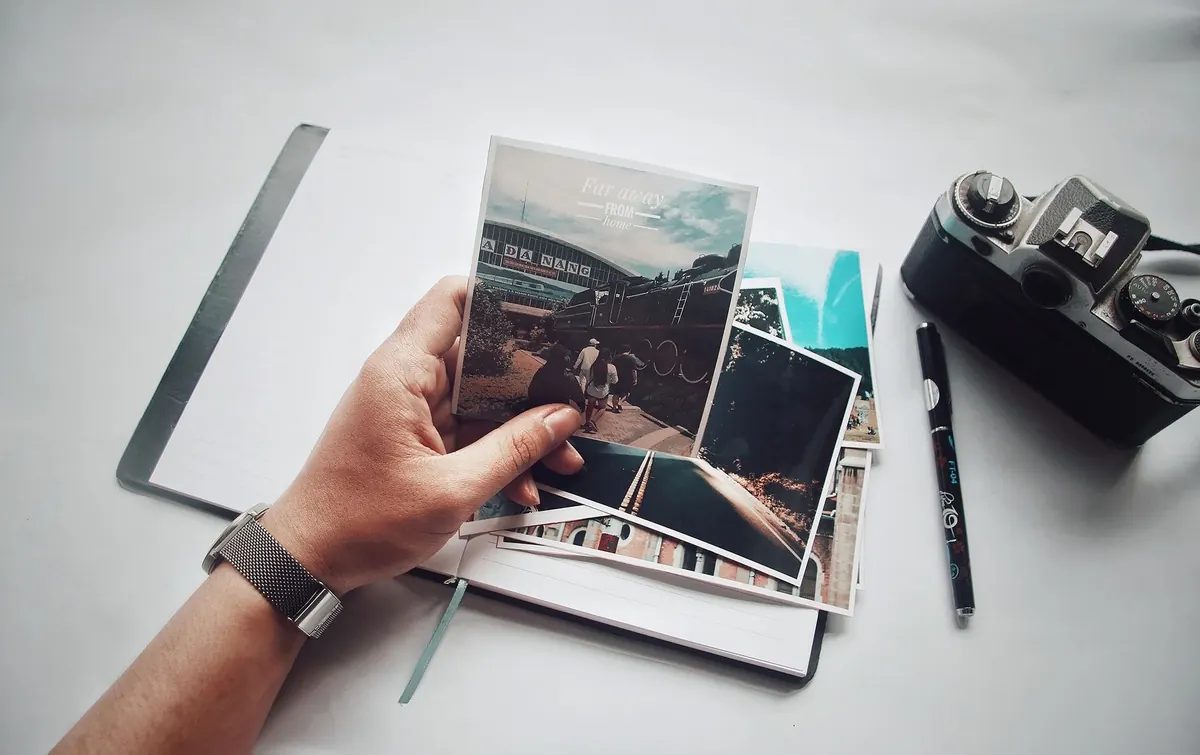
Your camera roll is almost certainly your main source, and it is almost certainly overwhelming. Don't try to sort all of it. Set a timer for twenty minutes and go back through the last month only. Mark thirty to fifty images as favourites: the ones with people in them, and the ones that show a place or a routine. Skip the duplicates and the screenshots.
Print them small. Standard 6x4 prints are quick and cheap at a shop, and small prints are easier to arrange than large ones. Keep a digital folder named by month and year, so you always know where the master copies live. If you print at home, print in batches of twenty rather than one at a time.
If your camera roll is thin on everyday material, start filling it now. One photo a day, unposed: the kettle, the bus stop, the washing line, the state of the kitchen table at six o'clock. Write nothing against it but the date. When you look back, those are the pictures that will bring the month back fastest.
Three lines is a full entry. Start with the date, then answer three questions: what happened, who was there, and what would you forget first? Writing in the present tense often keeps things specific. "The train is late again and I'm eating a pasty on the platform" tells you far more than "we had a lovely day out".
If nothing stands out, write the mundane details down: the price of milk, the name of the road, what was on the radio. Those are the things you won't be able to reconstruct in ten years, and they are the reason a record like this is worth keeping.
Write for yourself rather than an audience. Entries written to impress read badly later; entries written to remember read well.
Do this while the volume is still small. On the physical side, one box per year is plenty, labelled on the side and kept somewhere you can reach without moving furniture. Keep prints in date order and use envelopes for tickets, letters and cards.
On the digital side, the aim is simple: every photo that matters should exist in two places. A folder for each year on an external drive, plus a cloud backup if you use one, will do. Delete as you go — the blurred shots, the accidental videos of your feet — so the folder stays something you can scan in a few minutes rather than dread opening.
Keep a tray or envelope for paper that arrives during the week and empty it into the box on a Sunday. Five minutes, once a week, is the whole system.
Set aside an hour at the end of the fourth week, with the prints, your journal lines and a cup of tea. Lay the photos out in date order, then choose eight to twelve that tell the month's story. Write a heading, add a short summary of no more than 150 words, and slot in the journal entries where they fit. Aim for a complete record rather than a beautiful one; decoration can come later, or never.
Then close the album, put it on the shelf and leave it alone. Reworking old pages is the quickest way to stop making new ones.
Repeat the pattern on the first weekend of each month: twenty minutes of photo sorting, ten minutes of writing, an hour of assembly. Ninety minutes a month is realistic; much more and it becomes a project you have to find time for.
Two things will happen. You'll miss a week, and some months will look thin. Neither matters. When you fall behind, pick the record back up with the current week rather than trying to fill the gap. Gaps are honest, and a record with gaps is worth far more than one that stopped in February.
Decide, too, who the record is for. If you're keeping a record of someone else's childhood, think carefully before posting pages publicly; a private album is usually the better home for anything that isn't yours to share.
Start with this week. Choose a format tonight, take one photograph tomorrow, and write three lines before bed.
Photo: Ylanite Koppens / Pexels
Preserve and share your life's memories.
Copyright © 2026 Memo Lane. All rights reserved. Memo Lane.